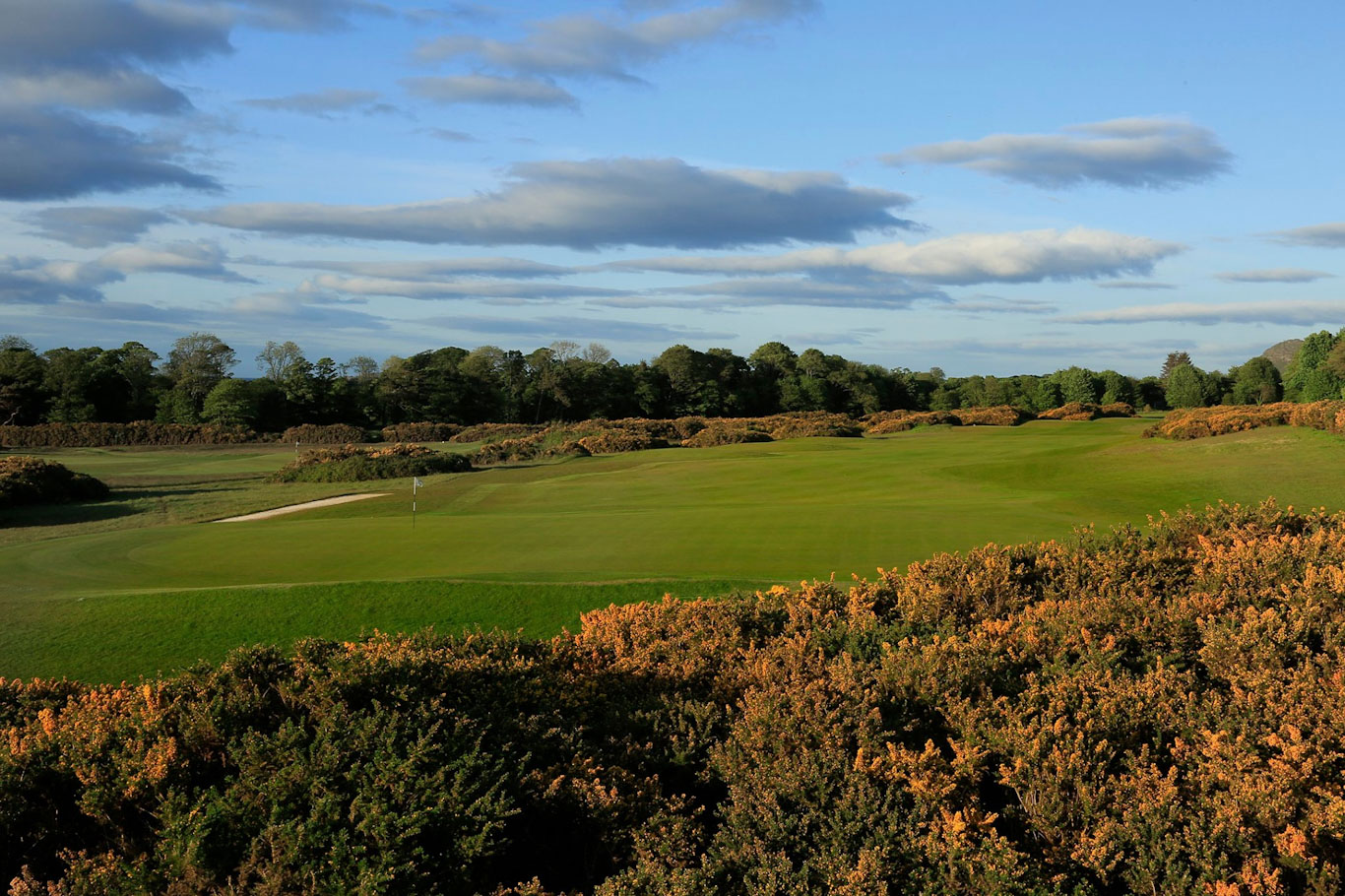
American golfers routinely spend £7,000 to £10,000 on a Scotland trip. They fly into Edinburgh or Inverness, they play Carnoustie, Turnberry, Royal Dornoch, Brora, Castle Stuart. They drive the A9 north and treat it like the pilgrimage it is. Meanwhile British golfers, who could reach Inverness on a 1h20 flight from London for under £100 return, are playing their third trip to the Algarve instead. I find this baffling and I have thought about it for years.
The explanation I have settled on is this: the Algarve requires nothing of you. You book the package, the transfer meets you, the hotel is warm, the golf is good, the bar is open. Scotland requires a car, a map, an appetite for weather that does not apologise, and accommodation that might be a self-catering cottage rather than a resort. For some golfers, that friction is a reason to go elsewhere. For the golfers I want to send north, that friction is the whole point.
Royal Dornoch Golf Club opened its current championship layout in 1877. Tom Watson, after playing there, called it his favourite golf course in the world. That attribution appears in multiple publications and Watson has not corrected it. The course does not need the endorsement — the plateau greens, the natural linksland, the turf that firms and quickens in any breath of wind — these speak for themselves. But the endorsement helps explain why American golfers know about Dornoch and most British golfers do not.
The 14th at Dornoch — called Foxy — plays 445 yards from the back tee along a narrow shelf of linksland with out-of-bounds left and a bank falling away right. There is no bunker on the hole. There does not need to be. The land does the work. The 18th tee sits above the town with the sea visible to the east and the Dornoch Firth opening to the north. It is the kind of finishing hole that makes you wish you had started from the first tee again immediately.
Green fee at Royal Dornoch in 2024: £280 for the championship course. This is not cheap. It is, however, less than Quinta do Lago South, less than any Open Championship rota course in England, and far less than what American and Japanese operators charge their clients to access the same starting sheet. The direct cost of a day's golf at Dornoch is not the obstacle. It never was.
Brora Golf Club is 20 minutes north of Dornoch. James Braid laid it out in 1923. Cattle wander the fairways — not as a novelty or a heritage affectation but because the land is also used for grazing and has been for a century. The green fee in 2024/25 was £65. The course is not manicured. It is not meant to be. The turf is real links turf, the greens are small and sloped, and the whole experience is golf in something approaching its original form. £65 for that is not a budget compromise. It is the correct price for what the course has always been.
Castle Stuart sits 8 miles northeast of Inverness on the shores of the Moray Firth. Gil Hanse and the late Mark Parsinen built it in 2009 with the explicit intention of making a modern course that felt as though the land had always been golf land. They succeeded. Tight links turf from the first year, holes that use the firth as both backdrop and hazard, a routing that climbs and descends the headland in a way that Hanse's design intelligence makes look inevitable. Castle Stuart is 30 minutes from Inverness airport. That fact should make it impossible to overlook. It is overlooked anyway.
Nairn Golf Club, established 1887, sits on the southern shore of the Moray Firth about 15 miles from Inverness. It is a Nairn town course — the club is central to the community in a way that private resort courses never are. Green fee approximately £120. The conditioning is meticulous because members play it every day of the year and expect it to be. The 10th and 11th holes, out along the beach, are among the most purely Scottish holes in golf.
Run the maths. Dornoch (£280) + Brora (£65) + Castle Stuart (£200) + Nairn (£120) = £665 for four championship rounds. Le Golf National outside Paris — the Ryder Cup course, a fine course — charges approximately £170 per round. You spend more playing one French layout than you spend playing Brora and Nairn combined. Scotland is not priced as a luxury destination. The courses are. These are not the same statement.
The accommodation approach that works is self-catering in Dornoch itself. The town has rental properties; the 19th hole is genuinely a short walk from the golf club. Eating in local pubs rather than a hotel dining room at £60 per head changes the trip's atmosphere in a way that is hard to articulate but easy to feel. The American golf tourist stays in the Dornoch Castle Hotel and plays every course on the peninsula. The British golfer who does the same trip will feel that they have found something rather than bought something.
The Gleneagles question. I am asked about it often because Gleneagles is the Scotland golf destination that British golfers know. My honest assessment: Gleneagles is a great hotel that happens to have golf. Royal Dornoch is a great golf course that happens to have accommodation nearby. They are not competing for the same thing. If you want a luxury Scottish resort weekend with some golf included, Gleneagles is correct and I will happily arrange it. If you want Scottish golf — specifically links golf on courses shaped by wind and erosion rather than by earthmoving equipment — the Highland route is the answer.
Fly London to Inverness, 1h20, under £100 return if you book with any timing at all. Collect a car — you need one, a compact is fine. Drive north on the A9, past Culloden, past the Beauly Firth. By the time Dornoch comes into view, with the cathedral spire and the firth, you will understand why Watson meant what he said. The only mistake is waiting to do it until you have run out of Algarve courses to revisit.
James Kinloch
Golf Travel Specialist · View profile →
Plan your trip
If this was useful, forward it to someone planning a golf trip. And if you'd like James to plan yours —